


Today, therapeutic massage for chronic back pain is becoming the first choice for many people, because there is one truth we only recognise after years of living with pain: painkillers are only a temporary fix, while the body keeps calling for help in its own way. Chronic back pain is not simply a matter of tired muscles or bad sitting posture. It is the signal of a body that has lost its balance and needs to be listened to and rebalanced from within.
For more than 5,000 years, from the ancient civilisations of China and India to Egypt, people have used their hands to heal. Massage is not only a ritual of body care; it is a systematic form of therapy that acts directly on muscles, tendons, blood vessels and the nervous system. Today, modern medicine has confirmed what the ancients already practised: therapeutic massage for chronic back pain is one of the drug-free therapies with the most clearly documented clinical results.
According to the statistics, more than 60% of people who come for a massage today are not simply looking to relax; they come for a specific health reason, and back pain is by far the most common one. That figure is no accident. It reflects a clear trend: modern people are searching for recovery solutions that are more lasting, more natural and less dependent on pharmaceuticals.
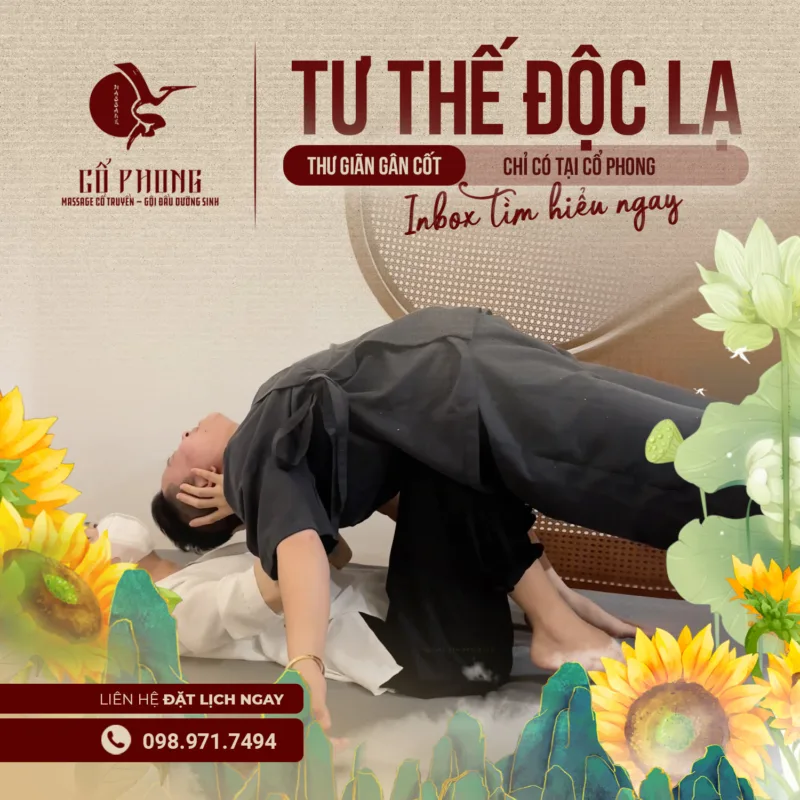
Table of contents
What Is Chronic Back Pain, and Why Does Massage Work?
Chronic back pain is defined as pain that lasts longer than 12 weeks despite treatment or rest. Plenty of people in Saigon know the feeling of waking up with an aching back, of a dull pain setting in after a few hours at a desk, or of turning over at night because of sudden spasms. Work pressure, long hours of sitting, a lack of movement and psychological stress form a vicious circle in which the back muscles never truly recover.
That is why treating back pain with massage is increasingly chosen as a safe lifeline that does not rely on overusing Western medication.
Massage for people with chronic back pain acts directly and precisely on that vicious circle of injury. When the therapist’s hands apply pressure to the muscle tissue, blood circulation is stimulated, bringing oxygen and nutrients back to muscles that have been starved of oxygen by prolonged tightness. At the same time, the body releases its own endorphins, which both relieve pain and regulate the inflammatory response.
The sympathetic nervous system, which in people with chronic pain is permanently on “high alert”, is gradually calmed as well, so the muscles no longer tighten as an unconscious defensive reflex.
To put it more simply: this therapy does not just feel good while you are on the table, it genuinely changes the way your body responds to pain over time. Combining acupressure, gliding strokes along the muscle and deep stretching separates the fibrous muscle bands and releases the points where nerves are compressed. Session after session, pressure is taken off the vertebrae in the lower back, giving you back a flexible range of movement and a noticeably lighter, brighter state of mind.
Advanced Back Massage Techniques and What They Actually Do
Not everyone realises that back massage is a rich system of techniques, each movement aimed at a specific physiological goal. For anyone looking for a drug-free approach to back pain, understanding what each technique really does will not only help you judge the quality of the service you are receiving, it will also make you a more active participant in your own recovery.
Someone without proper training can easily get it wrong, producing the opposite effect or even causing further damage to already weakened muscles, which is why being treated by a properly trained therapist is always the first requirement.
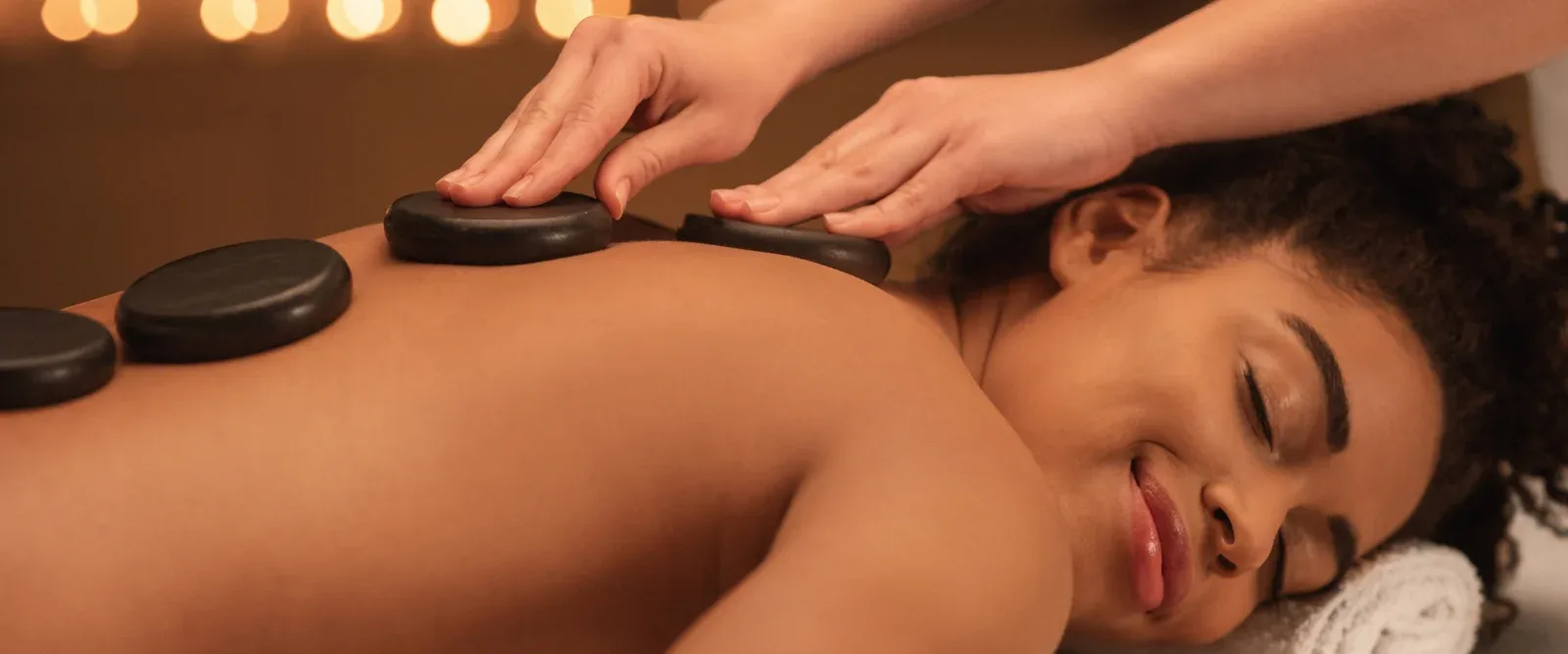
Kneading and deep muscle stretching is the foundation of every back pain recovery massage protocol. The therapist uses both hands alternately to press and stretch the muscle groups of the back, buttocks and thighs, concentrating the force in the palms and thumbs in order to reach the deeper muscle layers, which are often the true source of long-lasting dull pain. This technique comes from sports massage and is widely used in rehabilitation because of its ability to soften tight muscle tissue, increase flexibility and noticeably reduce pain after each session.
The gliding technique used to find points of tension, on the other hand, is more exploratory. The therapist places both hands flat on the skin and glides gently downwards and then outwards to either side, repeating the movement many times. This is an important step for sensing how the muscle tissue responds and identifying the areas where neuromuscular tension has built up, areas the person on the table may not even be aware of.
It is also why an experienced therapist can usually “read” a client’s body faster than any diagnostic machine, and why a back pain recovery massage that genuinely works always begins with this exploratory step rather than with hurried, heavy pressing.
Opening the acupoints along the spine demands far greater precision. Using both thumbs to press firmly and deliberately along either side of the vertebrae, this technique is based on the meridian theory of traditional medicine, activating acupoints that connect directly to the internal organs and to parts of the whole body. For people with chronic back pain, this is usually the technique that produces the clearest sense of things “opening up” after a session, because it works not only on the muscles but also on the flow of qi and blood that has stagnated through long-standing pain.
In addition, the gentle skin-rolling technique performed with the fingers along the back works not only on the surface of the skin but also stimulates microcirculation, removes dead skin cells and improves the skin’s elasticity. It is usually performed in the middle of the session, before finishing with light percussion to reactivate the whole body, a rhythmic loosening movement that helps the nervous system “come out of” treatment mode and returns the body to its natural balance.
This technique is especially effective for people who are exhausted or suffering long-term fatigue, when both body and mind need to be “reset” after a long, stressful day.
One point deserves emphasis: each technique only delivers its full effect when it is performed in the right order, with the right pressure and in the right place. That is precisely the line between an ordinary relaxation massage and a back pain recovery programme with real therapeutic value. And it is also why everyone who takes the drug-free path to healing seriously understands that choosing the right therapist, the right technique and the right plan matters no less than any prescription.
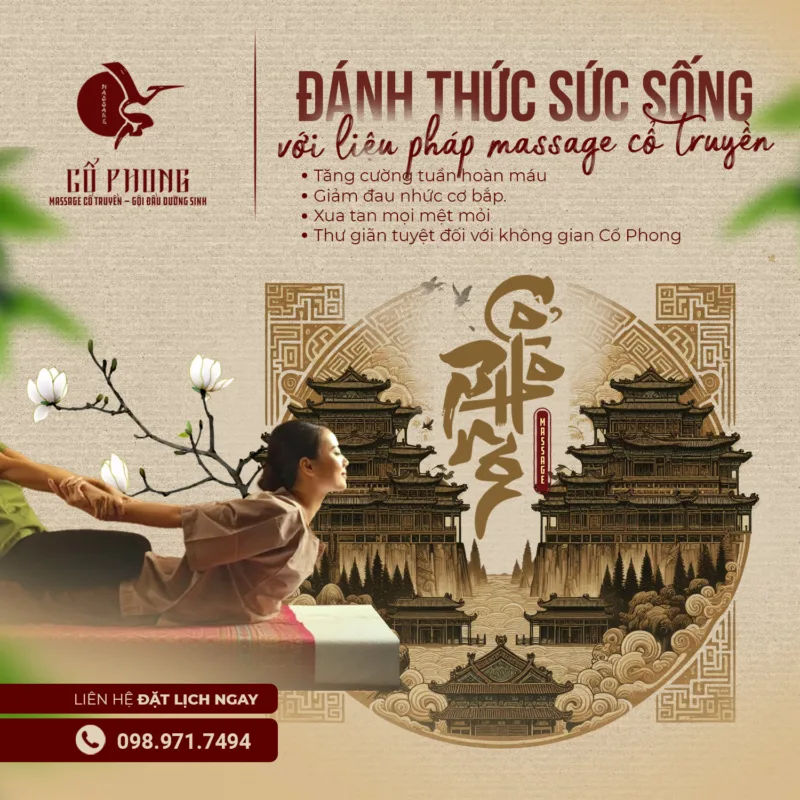
Massage Cổ Phong: A Trusted Address for Chronic Back Pain in Saigon
If you are genuinely serious about restoring the health of your back, choosing the right place matters just as much as choosing the right method. In Saigon, where the rush of daily life and relentless work pressure steadily wear down spinal health, Massage Cổ Phong is the treatment space many people turn to once back pain has become a constant preoccupation.
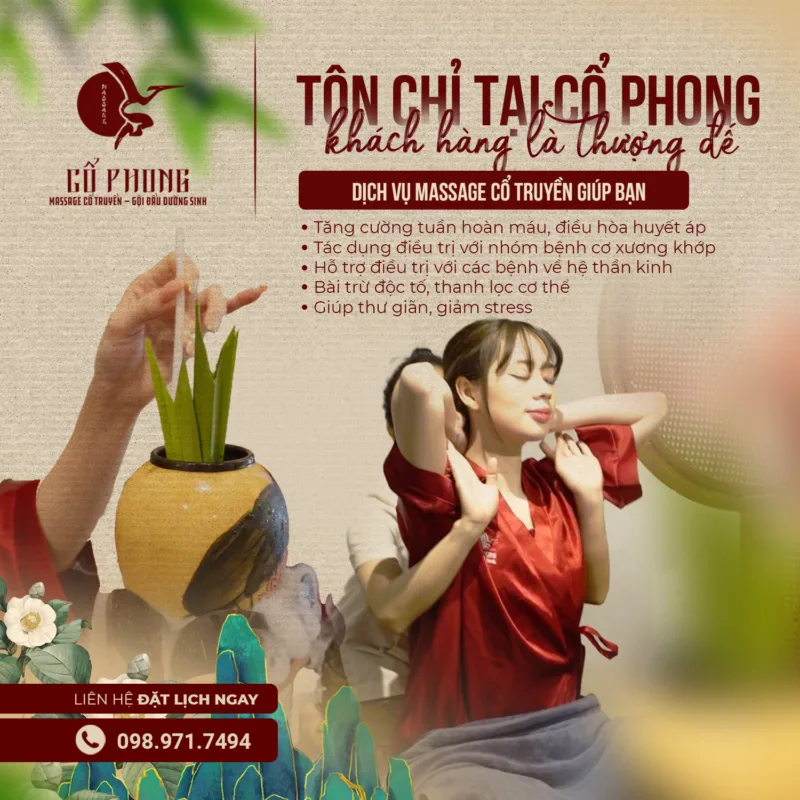
What sets Cổ Phong apart is not only its serene setting or its methodical technique, but its treatment philosophy: every client is a unique body that needs to be assessed and listened to, with a plan built to suit them, rather than a rigid procedure applied to everyone. The therapists here are trained in depth in therapeutic massage for chronic back pain, flexibly combining traditional techniques with modern therapies such as steam, cupping and gua sha to improve the flow through the meridians and speed up the recovery of muscle tissue.
If you are looking for a drug-free approach to back pain that is genuinely effective and lasting, let Cổ Phong walk that road with you. Your body deserves to be cared for by hands that know their craft and by people who truly want you to feel better every day.
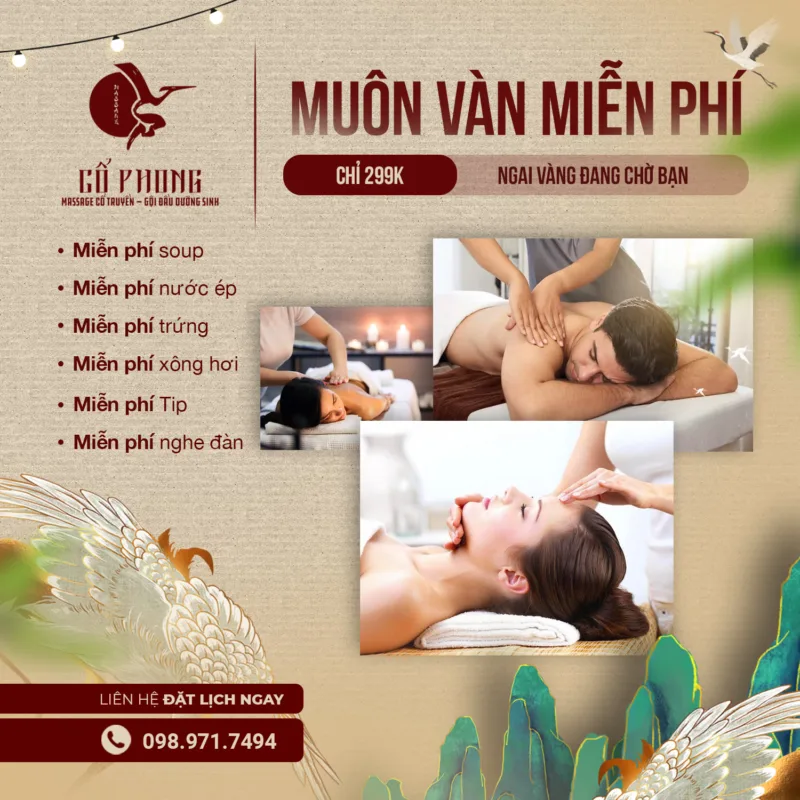
🗓 Book your appointment today!
Bến Thành Branch (formerly District 1)
- 106-108 Lê Thị Riêng Street, Bến Thành Ward, TPHCM
- Hotline: 083.22222.92 – 0993.106.108
- Opening hours: 10h-22h
- Facebook: Massage Cổ Phong District 1
Bàn Cờ Branch (formerly District 3)
- 408 Nguyễn Thị Minh Khai, Bàn Cờ Ward, TP.HCM
- Hotline: 0989.71.74.94
- Opening hours: 10h-22h
- Facebook: Massage Cổ Phong District 3


