


There is one question that many people living with spinal pain ask, often with a fair amount of anxiety: should you massage a herniated disc or not? The answer is not a simple yes or no, because this is a complex condition that accounts for 65 to 75% of all cases of lower back pain and is behind 76% of sciatic nerve pain cases. Only by understanding the condition properly, and understanding the method properly, can you choose a recovery path that is both safe and lasting.

Table of contents
Herniated Discs Through the Lens of Traditional Medicine
While modern medicine defines a herniated disc as a condition in which the soft nucleus inside a spinal disc slips out of its normal position and presses on a nerve root, traditional medicine views the same condition through a different lens that is no less insightful.
From the perspective of Oriental medicine, the root of the illness lies in the weakening of the liver and the kidneys, the two organ systems that play the leading role in nourishing bone and sinew. When liver and kidney function declines, the body becomes vulnerable to wind, cold and damp, three pathogenic factors that invade the bladder and gallbladder meridians, blocking the flow of meridian energy and disrupting the harmonious circulation of qi and blood. The inevitable result is pain and restricted movement.
If this state persists without intervention, the stagnation settles deeper and deeper, continuing to erode liver and kidney function and creating a vicious circle that is hard to escape. Overexertion, repeatedly moving with poor posture, or an injury that causes blood stasis are all factors that trigger the condition and accelerate its progression.
Recognising the Symptoms Before It Is Too Late
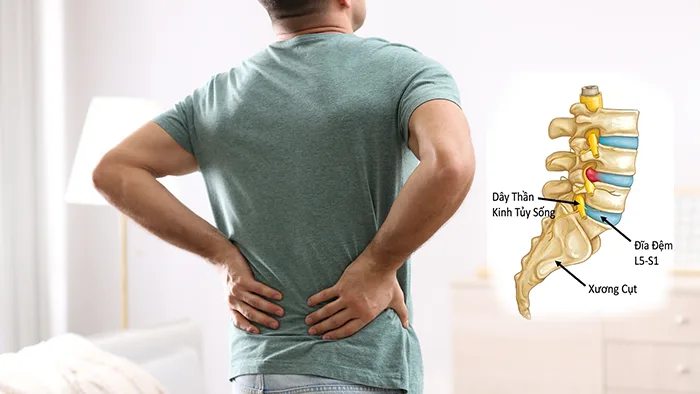
A herniated disc does not always announce itself loudly. Many people only realise they have the condition once the symptoms have already become worrying. Sharp pain that appears when bending forwards or backwards, and sometimes even when returning to an upright position, is usually the first signal. It is often accompanied by numbness radiating down one or both legs, which becomes especially noticeable when walking, sitting for long periods, sneezing or coughing hard.
As the condition worsens, patients may notice a loss of strength in the legs, an inability to stand on tiptoe, and a loss of fine control over the toes while walking. A pins-and-needles sensation spreading from the buttock down the back of one leg is the classic presentation of sciatica caused by a herniated disc. In severe stages the condition can lead to loss of bowel and bladder control, and if it is not treated in time, muscles that go unused for long periods will begin to atrophy, making walking progressively more difficult.

Should You Massage a Herniated Disc? The Answer From Clinical Practice
This is what worries a great many people, and the answer from professionals is becoming clearer and clearer: yes, but only with the right technique, at the right time, and in the right hands.
Massage for a herniated disc, or more precisely acupressure massage, is a therapy that uses the fingers and hands to apply controlled pressure to acupoints, tendons and joints in order to dilate blood vessels and increase circulation, which in turn helps to reduce inflammation and swelling at the injured area. At the same time, these massage techniques help to release tightness in muscles, tendons and ligaments, allowing the joints to gradually regain their natural suppleness and mobility.
Just as importantly, treating a herniated disc with massage also helps prevent spinal degeneration, a very common secondary complication among people who have lived with a herniated disc for years without proper treatment.
Combined with a healthy lifestyle such as a balanced diet, weight control and suitable gentle exercise, safe and methodical massage can become a cornerstone of a drug-free recovery programme for people with a herniated disc.
The Acupressure Massage Procedure for a Herniated Spinal Disc
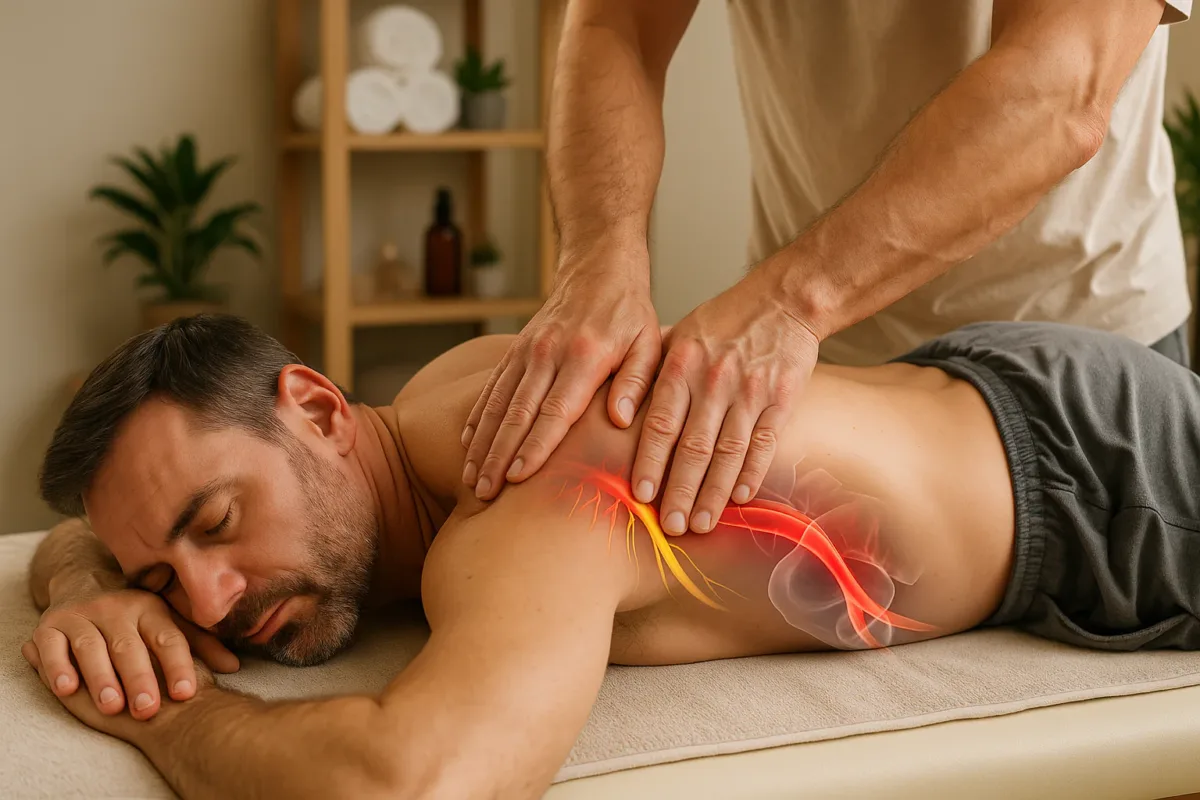
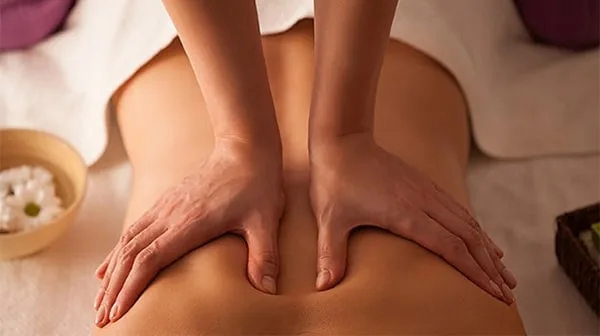
The session is usually carried out with the client lying face down and the therapist standing beside them, working in sequence from shallow to deep, from light to firm, and from pain-free areas towards the focal point of the pain.
Softening the muscles and releasing the tissue: The therapist begins with a kneading movement, using the heel of the hand and the pads of the fingers to press gently into the skin and move in circles along both sides of the spine, from the D7 vertebra down to the buttocks, repeated three times. Next comes a rolling movement using the back of the hand or the finger joints, combined with gentle wrist motion and just enough pressure, also repeated three times along the same path.
This is followed by a squeezing movement in which the thumb works together with the other fingers to grip and gently lift the muscle on either side of the spine, repeated three times so that the muscles are fully relaxed before the next stage begins.
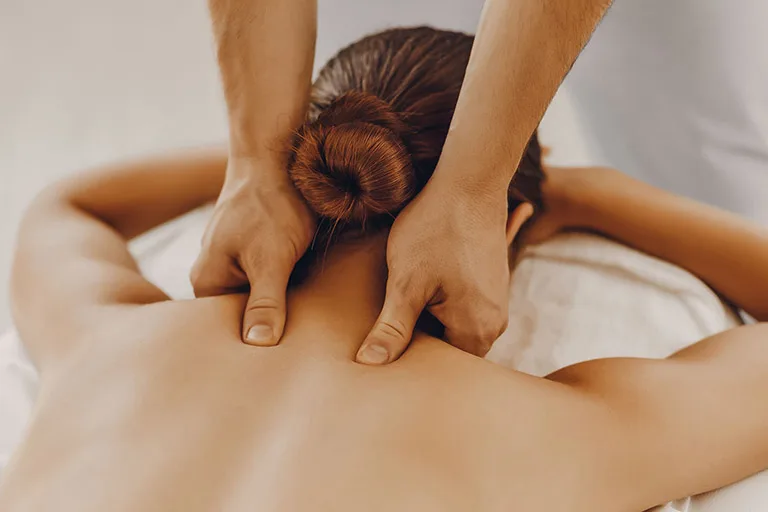
Deep work on the herniated spinal segment: The therapist uses the pad of the thumb to press, knead and rotate clockwise on the Shenshu, Dachangshu and Jiaji points from L1 to S1 for three to five minutes, in order to soften the muscles and release the tightness. This is followed by acupressure on the Jiaji, Shenshu, Dachangshu, Geshu and ashi points, using the tip of the thumb to press slowly with gradually increasing force until the client feels a heavy, tight sensation, then holding for about one minute.
One important note at this step: never knead while applying acupressure, because combining the two movements can bruise the tissue and cause the client unnecessary pain.
Realigning the disc: Working from CT or MRI images to pinpoint the herniated area, the therapist uses the thumb to press and adjust following the principle of counter-direction and counter-force, with gentle pressure suited to the client’s pain threshold, for three to five minutes.
The entire procedure requires the practitioner to understand anatomy, to know the meridians and acupoints thoroughly, and above all to have the experience needed to read each patient’s physical responses and adjust the pressure and technique accordingly.
What to Keep in Mind for Safe Massage With a Herniated Disc
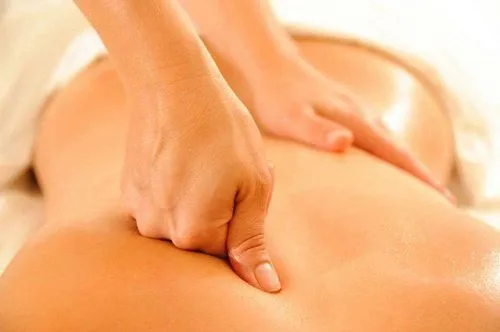
Massage for a herniated disc brings clear benefits, but only when it is done correctly. The first and most important point is that the practitioner must be a skilled therapist with real hands-on experience; not everyone with strong hands is able to do this work. The pressure must be adjusted flexibly according to each person’s condition and pain threshold, rather than applying one rigid formula to everybody. The technique must follow the principle of working from shallow to deep, from light to firm, and from pain-free areas gradually towards the focal point.
And finally, massage should be seen as one part of an overall treatment plan, combined with other supporting methods to deliver results that are more complete and longer lasting.
Massage Cổ Phong: A Trusted Address for Herniated Disc Therapy in Saigon
If the question of whether you should massage a herniated disc has now been answered, the next question many people ask is: where can you get a massage that is genuinely safe and effective? In Saigon there is no shortage of massage venues, but not every one of them has the expertise to work on a condition as complex as a herniated disc. Massage Cổ Phong is the address many clients come to trust after trying several other places without finding a real difference.
What makes Cổ Phong valuable begins with its team of therapists. Each one is carefully selected and thoroughly trained in applied anatomy, meridians and acupoints, and advanced therapeutic massage techniques. They do not simply learn theory; they complete hundreds of hours of practice before they ever work directly with a client. High skill, genuine care, and the ability to “read” each client’s body in order to adapt the approach are the things guests mention most often when they talk about their experience here.
The space at Cổ Phong is a distinctive plus in its own right. Designed in an East Asian style with a strong classical Chinese feel, from the warm, deep colour palette and glowing red lanterns to the faint scent of incense and the carefully chosen furnishings, everything comes together to create a setting that is both serene and culturally rich. Simply stepping inside is enough to slow your breathing and let your mind begin to let go.
Alongside its therapeutic massage programme for people with a herniated disc, Cổ Phong also offers many other complete wellness services and packages, such as a traditional wellness hair wash combined with head acupressure, a full-body relaxation massage to release the stress of long, demanding days, a detox steam session with herbal essential oils, and gua sha with cupping to regulate qi and blood and strengthen immunity. Every service is built as a complete experience rather than a disconnected treatment.
For anyone still weighing up whether they should massage a herniated disc, Cổ Phong is ready to walk beside you from the very first consultation until your body truly recovers the balance it deserves.
🗓 Book your appointment today!
Bến Thành Branch (formerly District 1)
- 106-108 Lê Thị Riêng Street, Bến Thành Ward, TPHCM
- Hotline: 083.22222.92 – 0993.106.108
- Opening hours: 10h-22h
- Facebook: Massage Cổ Phong District 1
Bàn Cờ Branch (formerly District 3)
- 408 Nguyễn Thị Minh Khai, Bàn Cờ Ward, TP.HCM
- Hotline: 0989.71.74.94
- Opening hours: 10h-22h
- Facebook: Massage Cổ Phong District 3


