


Here is an interesting truth that not everyone notices: in the evening, after a long day rushing around a restless Saigon, what your body craves most is not a hot bowl of rice or tomorrow morning’s coffee, but the chance to let your feet go completely, to have someone press gently into the acupressure points hidden deep in the soles. For anyone who has experienced it, that feeling is close to a kind of “meditation” in the simplest sense of the word.
The feet are often treated as an afterthought in our health routines, when in reality they carry the whole body all day long and are also where hundreds of acupressure points connected to every internal organ come together. Eastern traditional medicine has long compared the sole of the foot to a “miniature map” of the human body.
In the feet alone, out of the more than 300 acupoints on the human body, a great many of the important points used in therapy are concentrated here. Foot acupressure is therefore not simply a relaxation treatment; it is also a way of listening to and caring for the body from its very roots.
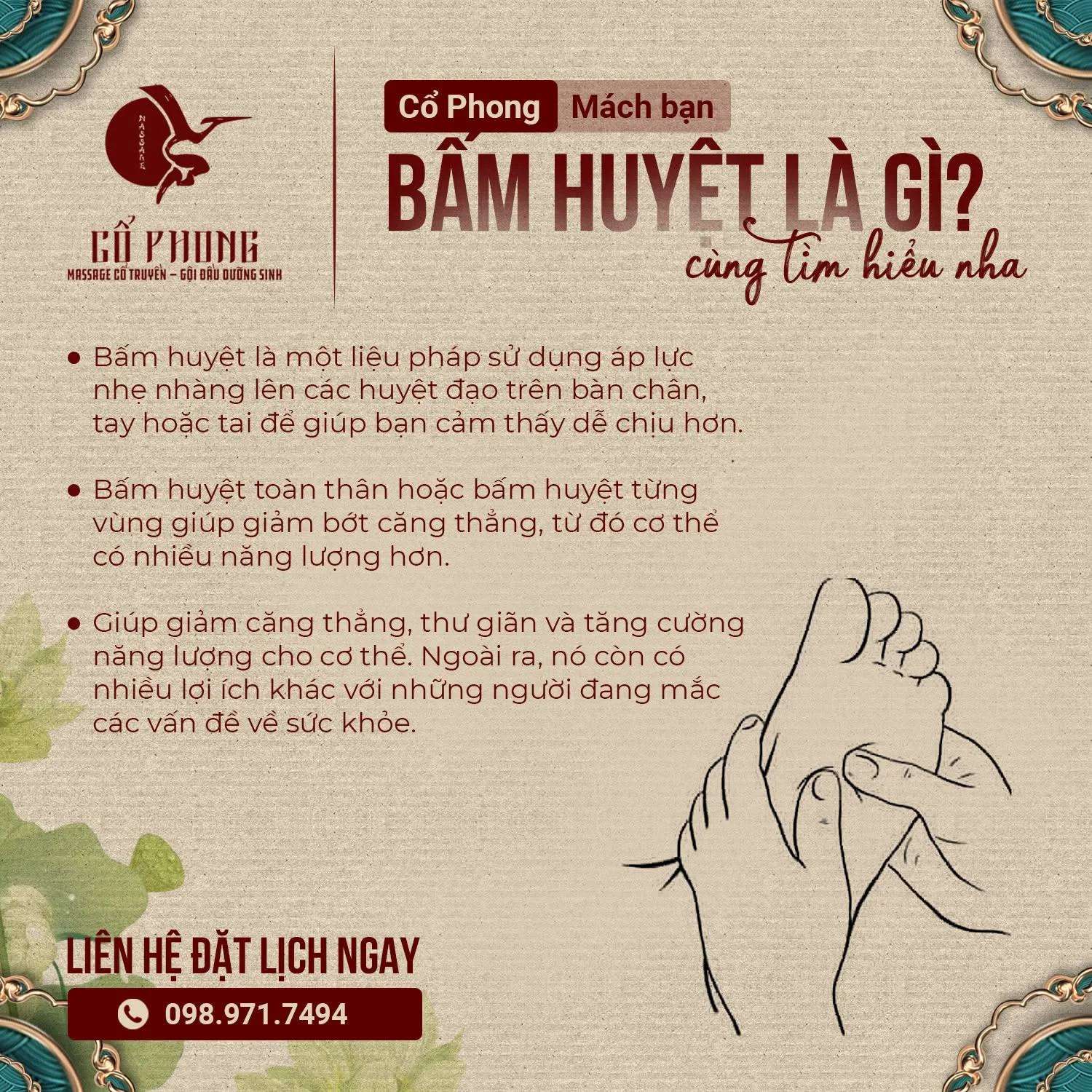
Table of contents
❓ Why Do the Feet Matter So Much?
To understand why foot acupressure has such a wide and deep effect on so many organs, you need to look at the feet from an anatomical and medical point of view. The human body has roughly 7,200 nerve endings in each foot, making it the terminus of the nervous system and, at the same time, the lowest point of the circulatory pathways. That is exactly why, when circulation becomes blocked here, the effects inevitably spread through the whole system.
Acupressure on the sole of the foot is a method that not only regulates and balances the meridians but also stimulates the internal organs, thanks to the close connection between the acupoints and the autonomic nervous system. This is also the foundation of reflexology, once practised by the ancient Chinese and Egyptians and later systematised into scientific theory in the early twentieth century.
Dr William Fitzgerald was the person who researched and recorded in detail how pressure applied to specific areas of the body can numb or influence related areas, and from that he proposed the theory of the “10 healing zones”, dividing the body into ten parallel zones that end in the reflex lines of the feet and hands. Building on that foundation, foot massage, also known as foot acupressure, has attracted growing interest from modern medicine, which rates its physiological effects highly.
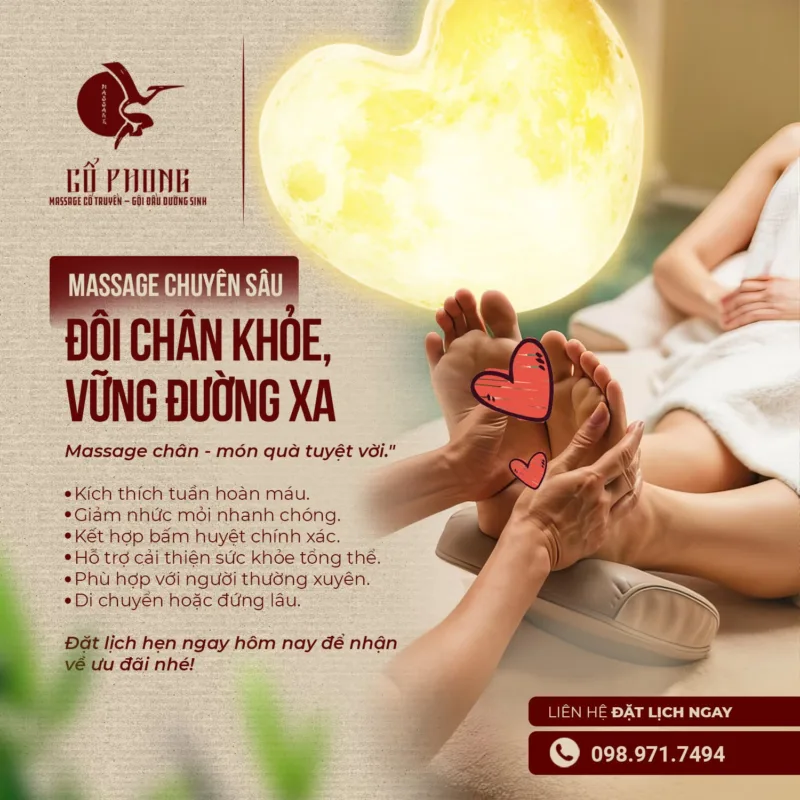
💗 The Foot Acupoint Map: 10 Key Points You Should Know
Understanding the foot acupoint map correctly helps you look after your own health at home more effectively, and it also lets you talk things through with your therapist during a professional foot massage. Below are the 10 important foot acupoints that anyone who cares about their health should know:
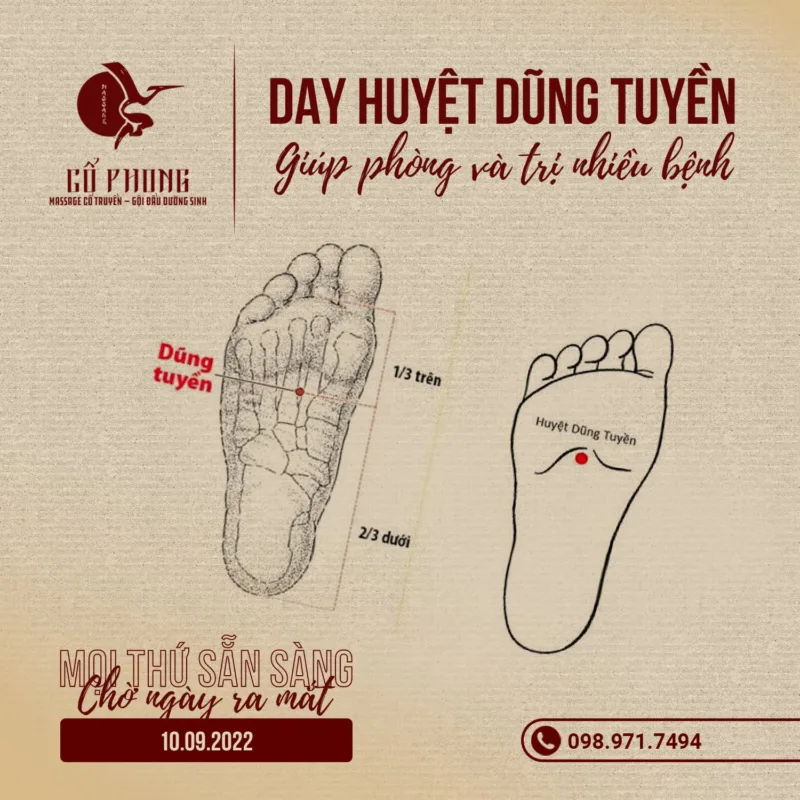
1️⃣ Dũng Tuyền (Yongquan, KI 1) is the point mentioned most often in Eastern medicine. It sits in the hollow one third of the way down from the top of the sole and is easy to find by curling the foot and the toes. This is the classic kidney point of the foot, and it tonifies the kidneys, calms the mind, improves sleep and eases aching bones and joints. The point helps restore kidney function, detoxify the body and increase blood circulation, but because it is one of the body’s vital points, the pressure applied must be handled with care.
2️⃣ Thái Xung (Taichong, LV 3) lies in the gap between the big toe and the second toe, about 2 cm up from the web. It is one of the liver points of the foot and belongs to the Liver meridian. Stimulating it correctly relieves headaches, lowers blood pressure and soothes tension and anxiety effectively.
3️⃣ Hành Gian (Xingjian, LV 2) sits right in the web between the big toe and the second toe. It belongs to the Liver meridian, supports the treatment of liver-related conditions and eases bloating and chronic insomnia.
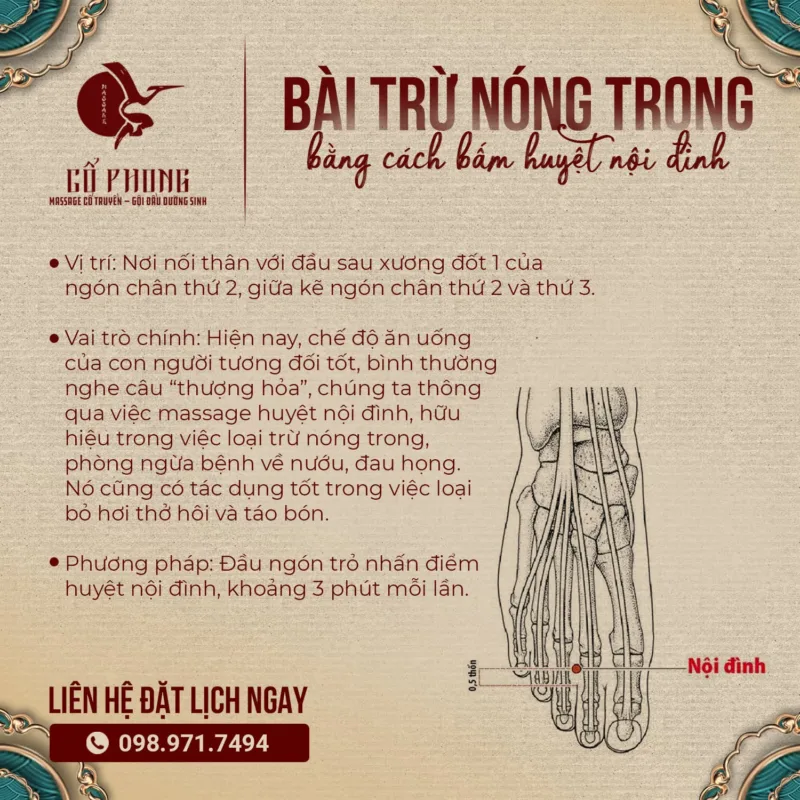
4️⃣ Nội Đình (Neiting, ST 44) is located in the web between the second and third toes. It supports the digestive system, relieves toothache and eases bloating and indigestion, which makes it particularly useful for anyone whose eating habits are irregular because of the pace of city life.
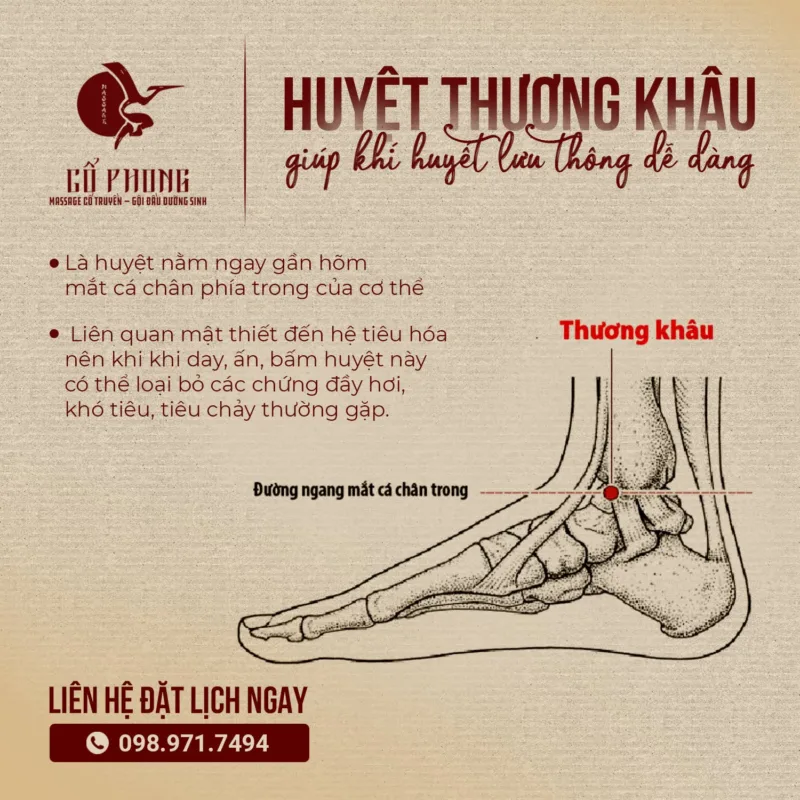
5️⃣ Thương Khâu (Shangqiu, SP 5) sits in the hollow just below the inner ankle bone. This point nourishes the spleen, helping the vital energy and blood from the spleen to flow through the meridians, and it also supports the treatment of bloating and indigestion, enteritis, constipation and other digestive complaints. It is simple to work on: press with your thumb and knead continuously for one to three minutes.
6️⃣ Chiếu Hải (Zhaohai, KI 6) is in the hollow below the outer ankle bone. It relieves back pain, improves insomnia and supports the treatment of gynaecological conditions and menstrual irregularity in women.
7️⃣ Bát Phong (Bafeng, EX-LE 10) is spread along the edges of the webs between the toes and consists of eight small points. Bát Phong relieves coughing, clears the bronchial passages and supports the treatment of lung conditions, while also easing numbness in the feet and improving the circulation of blood and vital energy.
8️⃣ Ẩn Bạch (Yinbai, SP 1) lies at the inner corner of the base of the big toenail. It belongs to the Spleen meridian and works to stop bleeding, support digestion and relieve abdominal distension.
9️⃣ Đại Đôn (Dadun, LV 1) is at the outer base of the big toenail. It belongs to the Liver meridian and supports the treatment of liver conditions and menstrual irregularity; it is often paired with Thái Xung in Eastern medicine treatment protocols.
🔟 Dịch Môn (Yemen) lies in the gap between the fourth toe and the little toe and belongs to the Triple Burner meridian. Working on this point helps relieve earache, sore eyes and throat inflammation, symptoms that are common when the seasons turn or when your immunity is low.
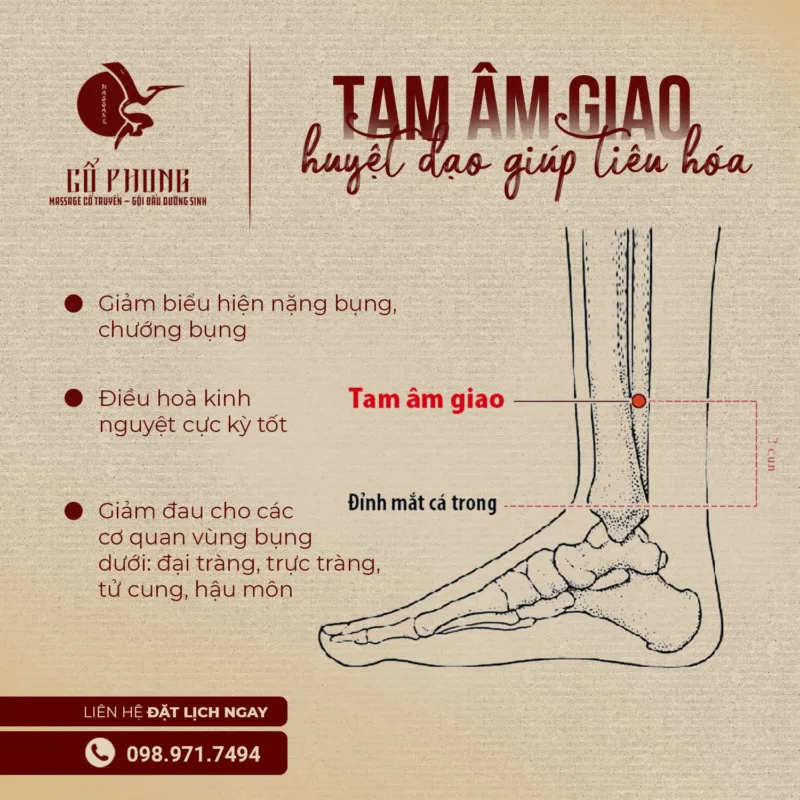
💖 What Does Foot Acupressure Actually Do for the Body?
For people living at Saigon’s hurried urban pace, the more practical question is this: does foot acupressure really make a difference? The answer, based on both traditional medicine and modern research, is yes, but you need to understand it correctly in order to expect the right things from it.
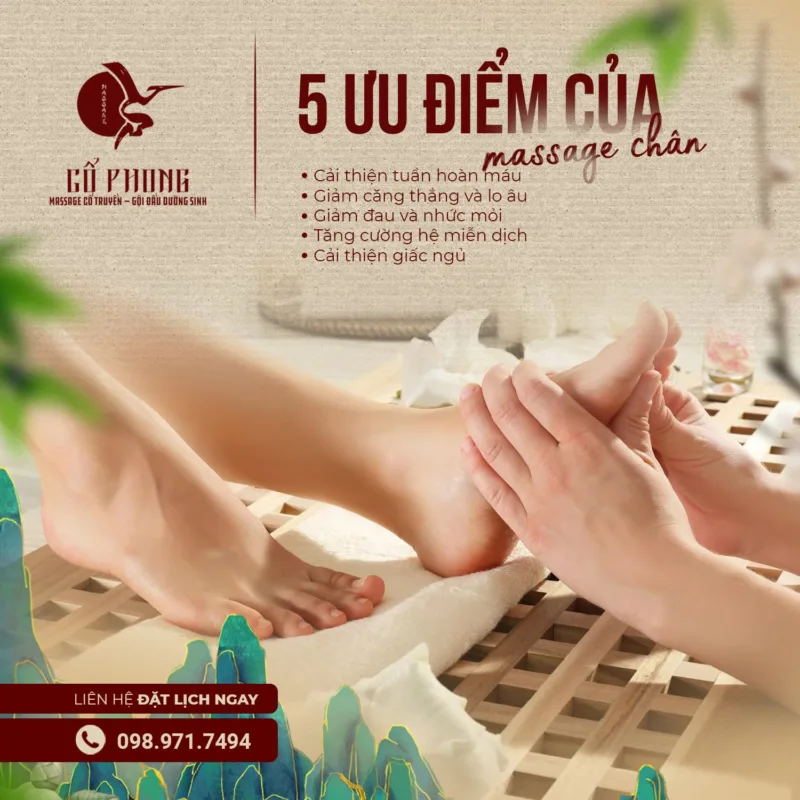
It improves blood circulation and reduces swelling. This is the most clearly documented benefit, especially for anyone who works at a desk or stands for long periods. When blood flows better to the feet and lower legs, the body releases the “blockages” we usually feel as heavy legs, numbness or mild swelling at the end of the day.
It triggers the release of endorphins, the body’s natural painkillers and feel-good chemicals. According to modern medicine, reflexology can stimulate the excitatory nervous system and relieve the negative effects of the inhibitory nervous system, which in turn prompts the endocrine and lymphatic systems to produce endorphins that reduce pain, boost the body’s own healing substances and strengthen immunity. This also explains why, after a good foot massage, people tend to sleep well and wake up feeling like a different person.
It improves sleep and reduces stress. Acupressure on the sole of the foot relaxes the brain and encourages drowsiness, so the person receiving the treatment falls into a deep sleep quickly and is freed from sleep disorders. At the speed Saigon moves, this is just about the most fitting natural remedy you could turn to.
It supports the function of the internal organs. By working on the corresponding reflex zones in the foot acupoint map, this therapy can help improve digestive, liver, kidney and respiratory function through the meridian mechanism of Eastern medicine. Of course, acupressure is a supportive therapy; it does not replace medical treatment in serious cases.
It strengthens your resistance to illness. Keeping up the habit of 10 to 15 minutes of acupressure a day helps you maintain optimum health and reduces conditions linked to stress and fatigue. This is why many people treat foot acupressure as a wellness routine rather than merely a quick fix when they feel unwell.
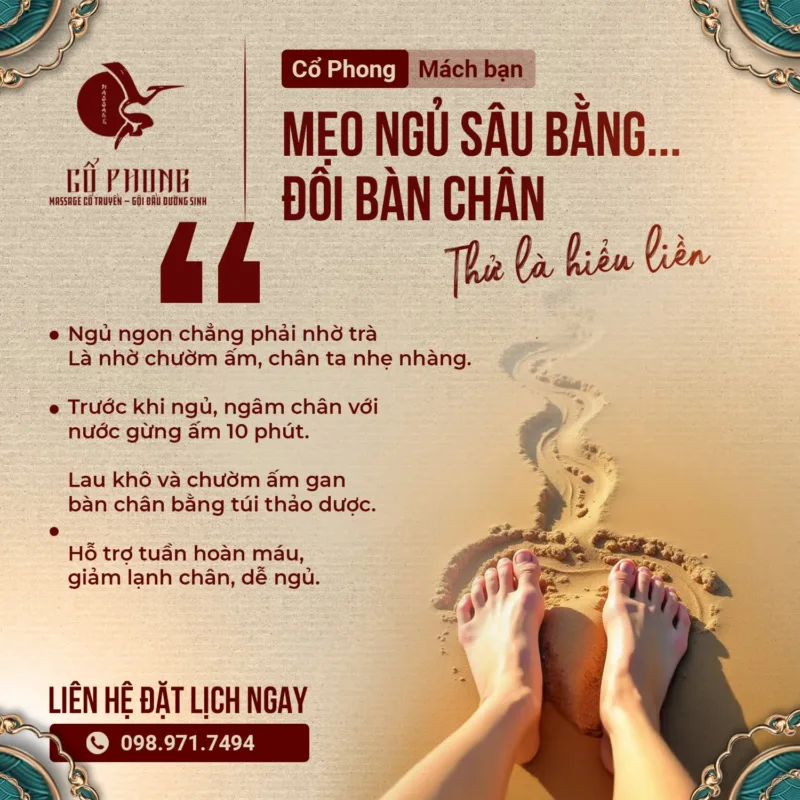
🏠 How to Do Foot Acupressure Properly at Home
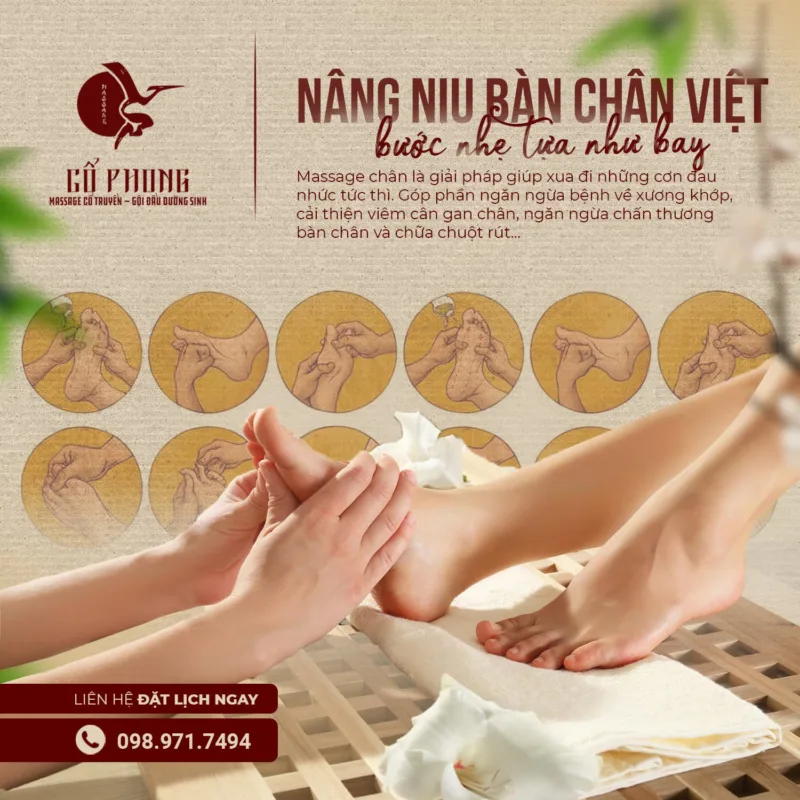
You can certainly practise a few simple acupressure techniques at home, as long as you grasp the basic principles and do not overdo it. Here are two common techniques:
To help relieve a cough and strengthen the lung energy, find the Dũng Tuyền point by curling the foot and the toes; the hollow one third of the way down from the top of the sole is the spot you are looking for. Use your thumb to apply pressure and massage in gentle circles for about 15 minutes, up to three times a day. For a chronic cough, keep up a midday session and one before bed for five to seven consecutive days.
To clear internal heat, support liver detoxification and regulate blood pressure, find the pulsing spot in the gap between the big toe and the second toe, which is the location of the Thái Xung point, then press gently with your thumb and hold the pressure for three to four minutes until you feel a mild tightness, and release. This technique is also used to help with insomnia and irregular periods.
One important note when practising on yourself: always start with the left foot before the right, work after exercise or once the body is warm, and never apply acupressure straight after a large meal or after drinking alcohol. Anyone with a fever, an acute infection, cancer or an injury to the feet should avoid it completely. Most importantly, the pressure must be moderate, firm enough to feel the point but never causing sharp pain, because proper acupressure is about helping blood and vital energy flow, not about putting the body under more strain.
🤔 When Should You See a Professional Instead of Doing It Yourself?
Doing foot acupressure at home is fine for maintaining your health and relaxing day to day, but to get a genuinely therapeutic result, especially when your body has specific problems such as back pain, long-running insomnia, chronic stress or digestive disorders, you need the hands of someone with real expertise.
Professional knowledge and hands-on experience in foot acupressure increase the therapeutic effect and limit unwanted risks. A properly trained therapist knows how to combine points, adjust the pressure to suit each person’s constitution and recognise the areas of each individual foot that need special attention.
Foot massage is not just “a bit of fun rubbing”; it is a method grounded in traditional medicine and increasingly recognised by modern medicine for its physiological effects. That is precisely why choosing a reputable foot massage venue with a properly trained team of therapists is something you should not take lightly.
️🎯 Experience Authentic Eastern-Medicine Foot Acupressure at Massage Cổ Phong
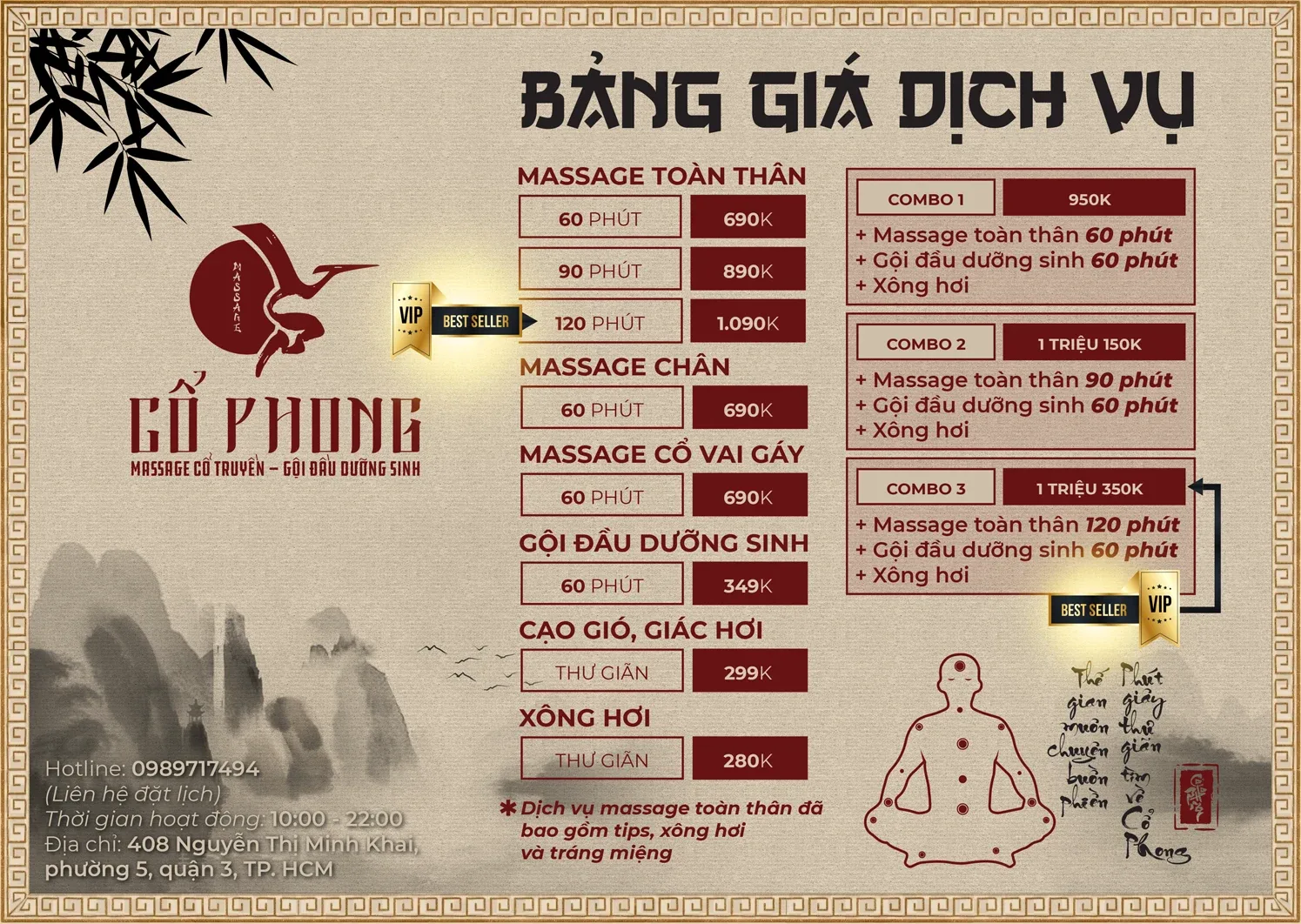
If you are looking for somewhere to experience foot massage in the true sense of the term, rather than a rushed service that applies the same pressure to every client, then Massage Cổ Phong at 408 Nguyễn Thị Minh Khai, District 3 is a name worth visiting once and returning to many times after that.
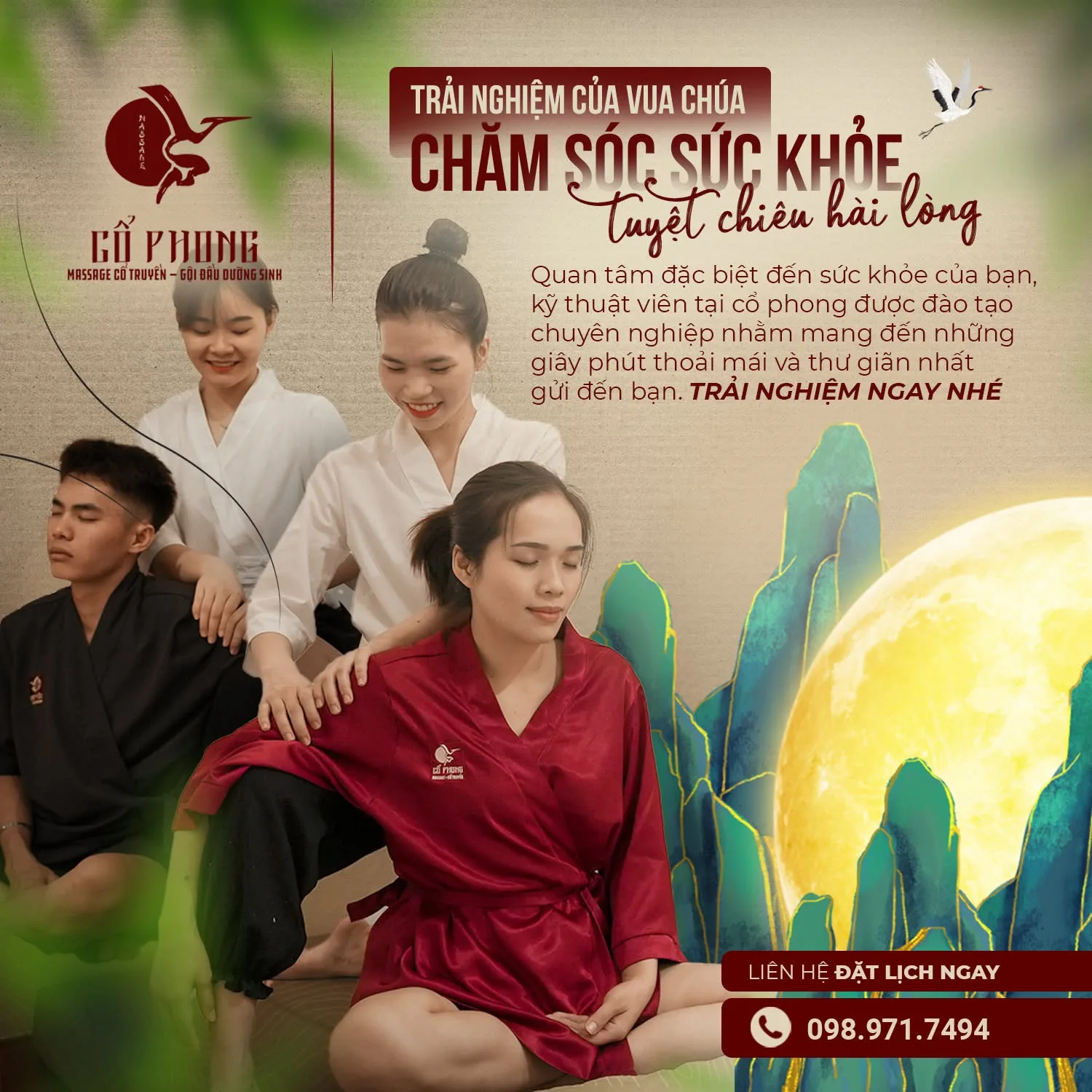
What sets Massage Cổ Phong apart in foot acupressure is a team of therapists trained in depth in Eastern Traditional Medicine, who know the foot acupoint map and know how to apply it flexibly according to each guest’s particular condition. You are not simply rubbed on the surface: the right points are worked, with the right pressure, at the right moment, following the traditional Eastern principle of harmonising blood and vital energy.
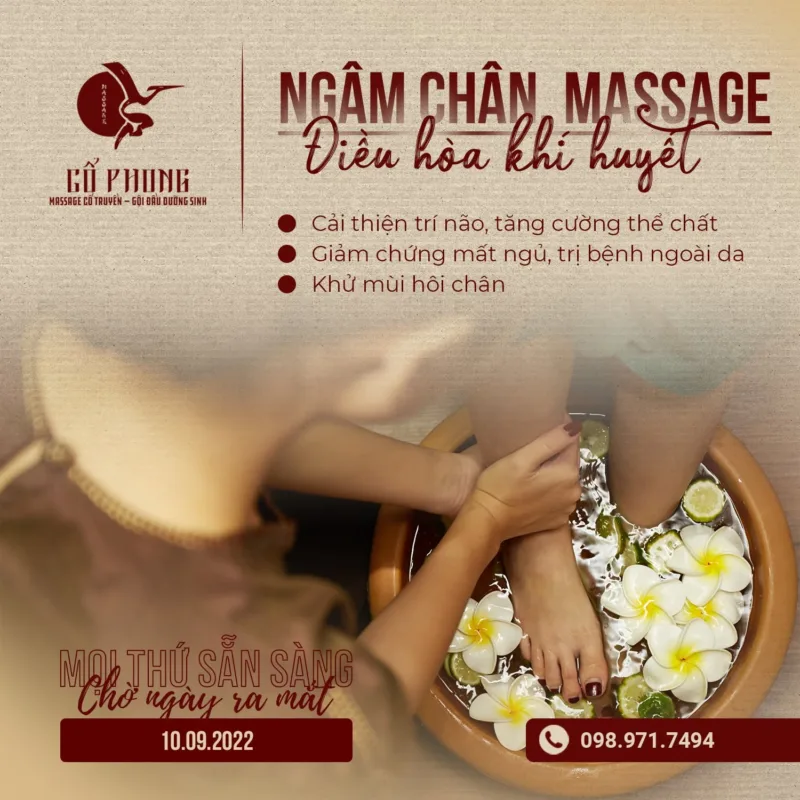
The space here is designed in a quiet East Asian style with classical Chinese detailing, creating an atmosphere of calm from the moment you walk in. The soft sound of the đàn tranh zither drifts in the background and dissolves the noise of the streets outside. Every foot massage here is usually combined with supporting treatments such as a herbal steam or a herbal foot soak, which open the meridians before the acupressure begins and noticeably increase the therapeutic effect.
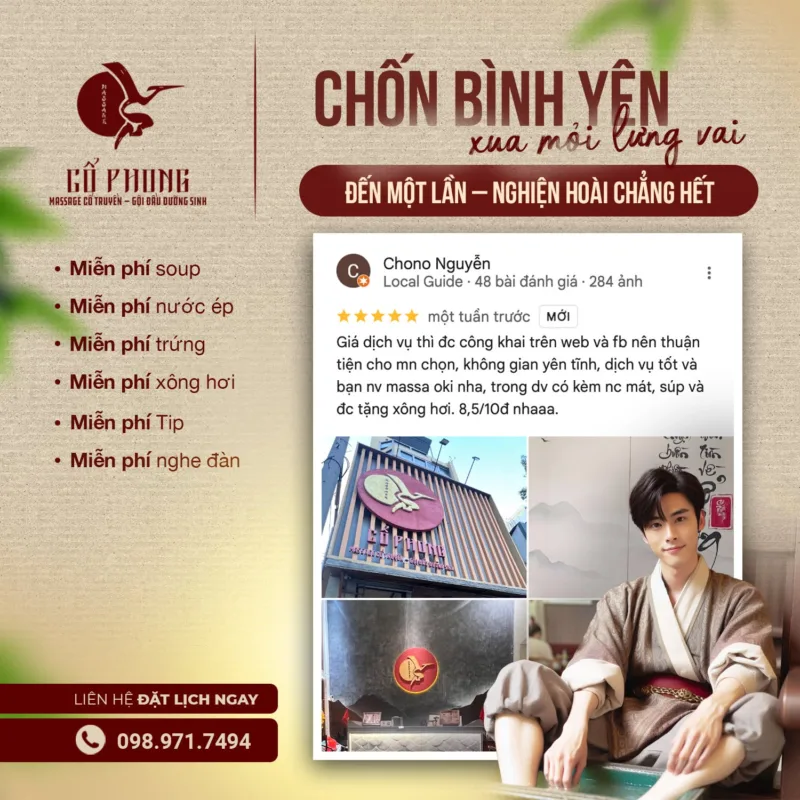
Guests at Massage Cổ Phong also enjoy a light meal after their treatment, including hot soup, egg and fresh juice, along with free use of the steam room, all part of the package at no extra cost. Massage Cổ Phong also follows a strict no-tipping policy, a small commitment that tells you plenty: the quality of service here comes from expertise and dedication, not from the pressure of a guest’s expectations.
In a city that never stops moving, your feet deserve a real rest, not just a chance to sit down, but attentive care from hands that genuinely understand the acupoints and understand what your body needs.
🗓 Book your appointment today!
Bến Thành Branch (formerly District 1)
- 106-108 Lê Thị Riêng Street, Bến Thành Ward, TPHCM
- Hotline: 083.22222.92 – 0993.106.108
- Opening hours: 10h-22h
- Facebook: Massage Cổ Phong District 1
Bàn Cờ Branch (formerly District 3)
Facebook: Massage Cổ Phong District 3
408 Nguyễn Thị Minh Khai, Bàn Cờ Ward, TP.HCM
Hotline: 0989.71.74.94
Opening hours: 10h-22h
If you want deep work across the whole foot, try the deep-tissue foot massage at Cổ Phong.


