


There is one question that almost every first-time spa guest hesitates over: should you go for a foot massage or a full body massage? It sounds straightforward, but in reality these are two treatments with completely different philosophies, mechanisms and recovery goals. Choose well and you leave feeling healed exactly where it mattered. Choose badly and, however pleasant the session was, you can still be left with a nagging sense that something was missing, without being able to put it into words.
This article will help you understand clearly how a foot massage differs from a full body massage, not as a dry list of features, but the way someone in the profession would explain it to their own family: expert enough to be accurate, plain enough to be genuinely useful.
Table of contents
The Feet: The Most Overlooked Part of the Body, and the Most Connected
Before we get to the comparison, it helps to understand why the feet deserve a treatment all of their own.
In Eastern traditional medicine, the feet are seen as the body’s “second heart”. Not as a romantic metaphor, but because the feet genuinely act as a pump returning blood to the heart, which matters especially for anyone who stands for long periods or moves very little.
What is more, according to reflexology theory, widely applied in both Eastern medicine and Western medicine since the early twentieth century, the sole of the foot contains more than 7,000 nerve endings and roughly 60 reflex points corresponding to the different internal organs of the body, from the liver, kidneys, heart and lungs to the thyroid and the digestive system.
This means that when an experienced therapist works accurately on the kidney reflex point on the sole of the foot, they are not just relieving tired feet; they are indirectly stimulating the function of that organ. This is the philosophical foundation that separates foot acupressure massage from ordinary rubbing treatments, and it is also why the question of what foot massage is cannot be answered simply with “massage on the feet”.
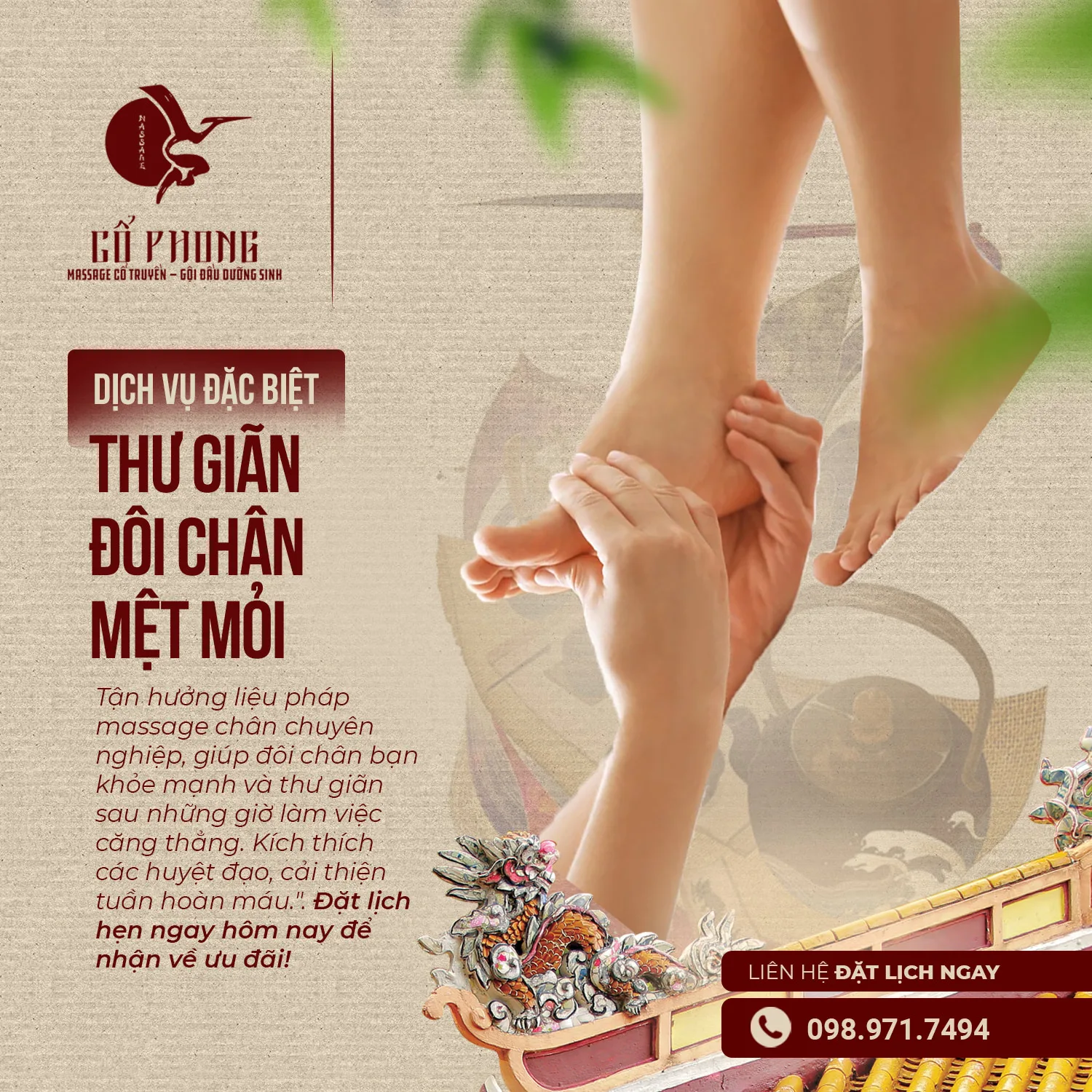
What Is a Foot Massage and How Does It Work?
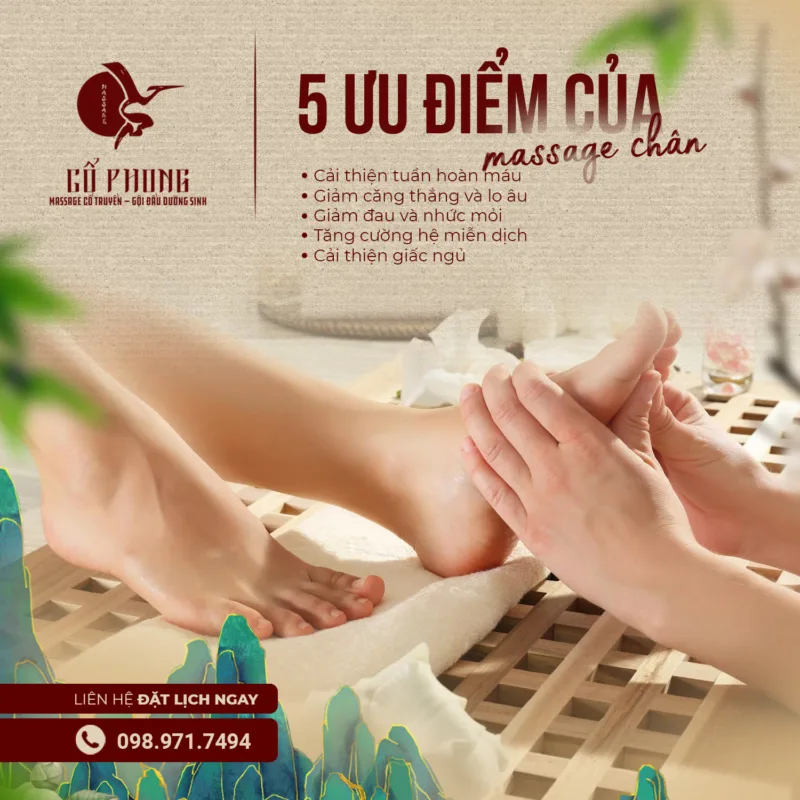
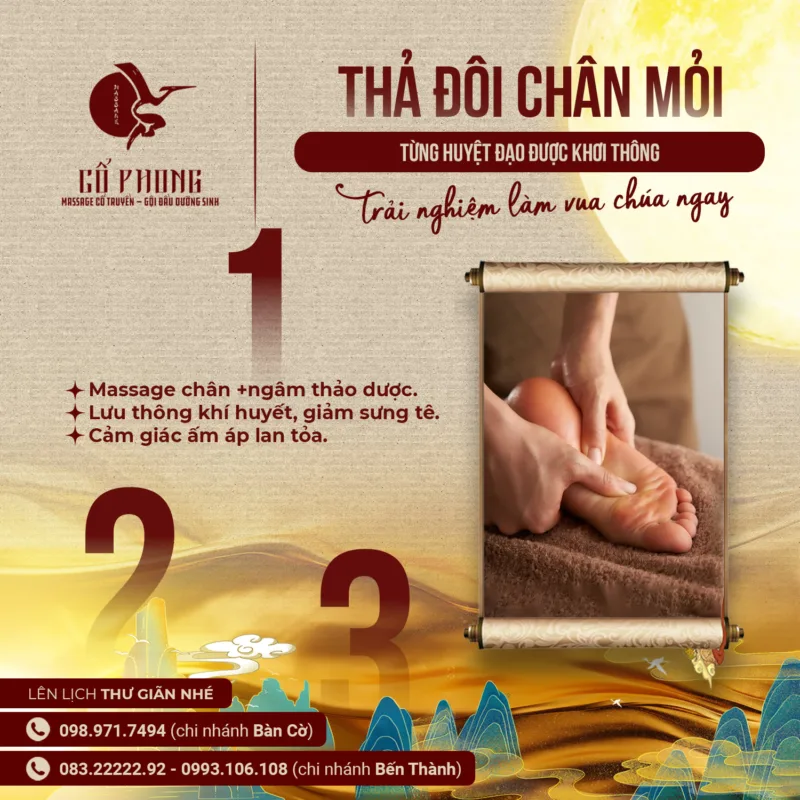
A foot massage is a treatment that focuses deep, targeted work on the sole, the heel, the toes, the ankle and the calf, using kneading, pressing, acupressure, rolling and rubbing techniques that follow the meridian lines and the acupoints.
What makes a foot massage completely different from simply “squeezing your feet to ease the ache” is how systematic it is. Every point on the sole is worked deliberately, never at random. The heel area relates to the pelvis and the lumbar spine. The middle of the sole reflects the state of the stomach and the pancreas. The big toe connects to the brain and the pituitary gland. When these reflex points are stimulated correctly, nerve signals are transmitted, the flow of energy is opened up and the corresponding organ is supported to work better.
In terms of modern physiology, foot massage stimulates the parasympathetic nervous system, lowers cortisol, increases blood circulation in the lower limbs and throughout the body, and gets the lymph moving, which supports the body’s natural detoxification process. A study published in the Journal of Clinical Nursing found that regular foot massage significantly improves sleep quality, reduces anxiety and lowers blood pressure in older people, results that plenty of younger city dwellers could also use.
In terms of convenience, a foot massage usually requires no change of clothing, can be carried out in a specialist chair and takes 30 to 60 minutes, which suits anyone who wants a quick recovery session during a lunch break or after work.
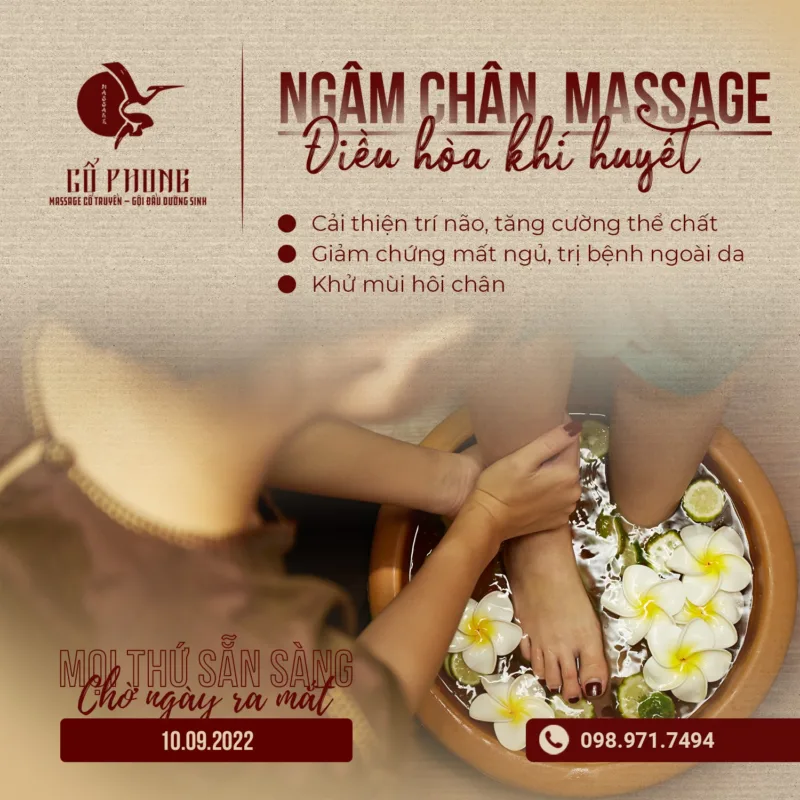
What Is a Full Body Massage and When Does Your Body Really Need It?
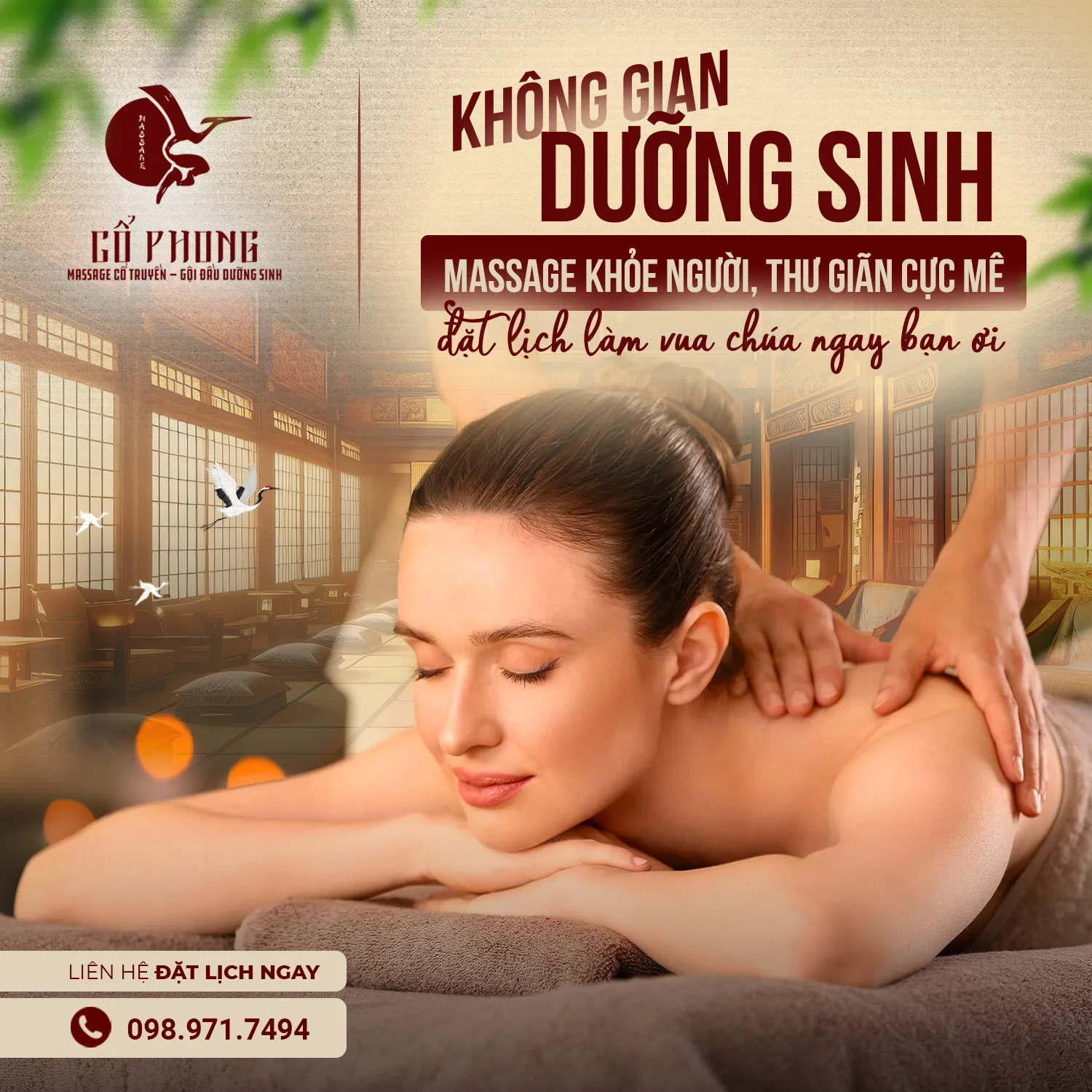
A full body massage, or body massage, is a treatment that works on many areas of the body at once, usually including the neck, shoulders, nape, back, lower back, arms and legs, and sometimes the abdomen and chest depending on the method. The therapist draws on a wide range of movements, from light stroking, deep gliding, muscle kneading and tapping through to acupressure, combined with natural essential oils, hot stones or herbs according to the treatment.
If foot massage works on the reflex principle, acting indirectly from the periphery inwards, then full body massage works on the direct principle, releasing muscle tension right where the damage is, improving local circulation and stimulating the lymphatic system across a wide area. This is why body massage is particularly effective for people with chronic neck and shoulder pain, back pain from sitting too much, whole-body muscle tension after intense exercise, or broad stress that leaves the entire body feeling heavy and sore without any one identifiable point of pain.
A full body massage session usually lasts 60 to 120 minutes, requires a change into specialist clothing so the therapist can work directly on the skin, and delivers the deep, all-over relaxation that people who have experienced it often describe as “being reborn”.
How a Foot Massage Differs From a Full Body Massage: The Differences Head-On
| Criterion | Foot Massage | Full Body Massage |
|---|---|---|
| Area worked | Sole, heel, toes, ankle, calf | The whole body: back, neck, shoulders, nape, arms, legs, abdomen |
| How it works | Reflexology; stimulating acupoints to act indirectly on the internal organs | Acting directly on the muscles, joints and circulatory system |
| Main techniques | Kneading, pressing and acupressure on reflex points | Stroking, gliding, kneading, tapping, combined with essential oils or hot stones |
| Duration | 30 to 60 minutes | 60 to 120 minutes |
| Clothing | No change needed; seated in a specialist chair | Change of clothing required; lying on a massage bed |
| Best suited to | Tired feet, long hours standing, sleep problems, supporting the internal organs | Neck, shoulder and back pain, whole-body stress, broad energy recovery |
So Which One Should You Choose?
The answer is not always “which one is better” but “which one suits the state you are in right now”.
If you have been through days of standing non-stop, wearing high heels, moving around constantly, or your legs feel as though they are weighted with stone, a foot acupressure massage will solve the problem faster and more precisely. That is especially true if you are dealing with sleep, digestive or blood pressure problems: reflexology through the feet is the shortest route to supporting the organs involved without reaching for medication.
Conversely, if your whole body feels tight, your neck and shoulders ache from a full day at the computer, your back is sore for no clear reason, or you simply want the deepest, most complete recovery experience possible, then a full body massage is the obvious choice.
And if you genuinely are not sure, the smartest answer is to ask the therapist at a spa you trust. Someone with real expertise will never push you towards the more expensive package; they will listen to your condition and suggest what suits you best.
Massage Cổ Phong: Where You Do Not Have to Wonder, Because Someone Understands Your Body Better Than You Think
Understanding how a foot massage differs from a full body massage is the first step. The next is finding somewhere expert enough to turn that understanding into a genuinely worthwhile experience. And this is where Massage Cổ Phong becomes a choice worth talking about.
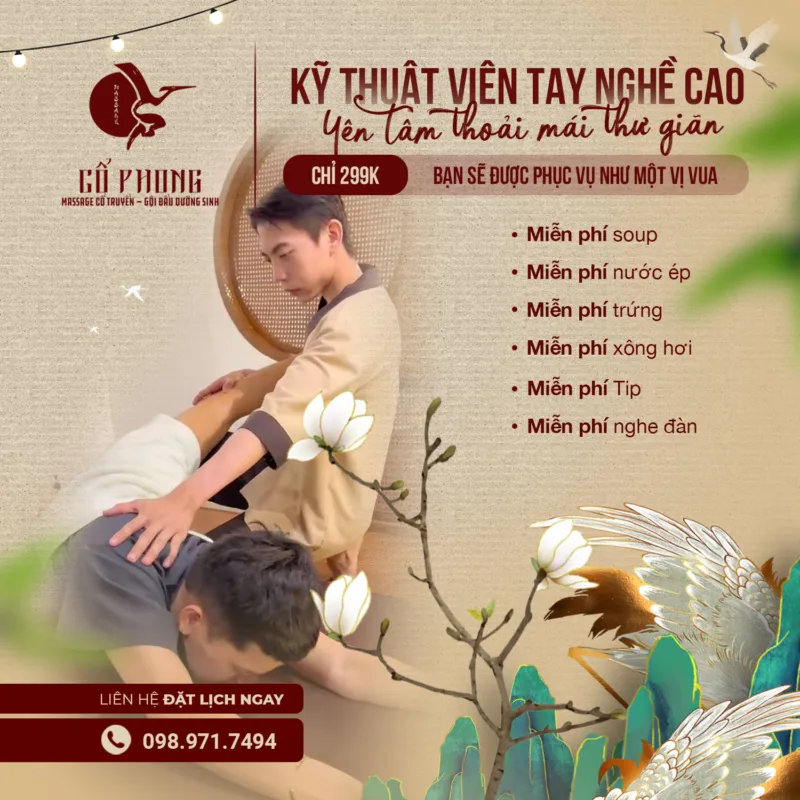
At Cổ Phong, both foot massage and full body massage are performed by therapists formally trained in acupoint science, reflexology and Eastern massage technique, not by people who picked up the trade in passing and then started serving guests. Before working independently, every therapist goes through in-depth training, learning to read a guest’s physical condition through the way the acupoints respond and to adjust the pressure and technique to suit each person and each session, rather than imposing one rigid formula on everyone.
The space at Cổ Phong is arranged in a traditional East Asian style, with warm natural wood, lanterns, classical Chinese decorative details and the gentle sound of the đàn tranh zither in the air, sometimes as a genuine live performance. Together it creates an atmosphere in which, from the moment you step inside, your nervous system already begins to settle before the massage itself has officially started.
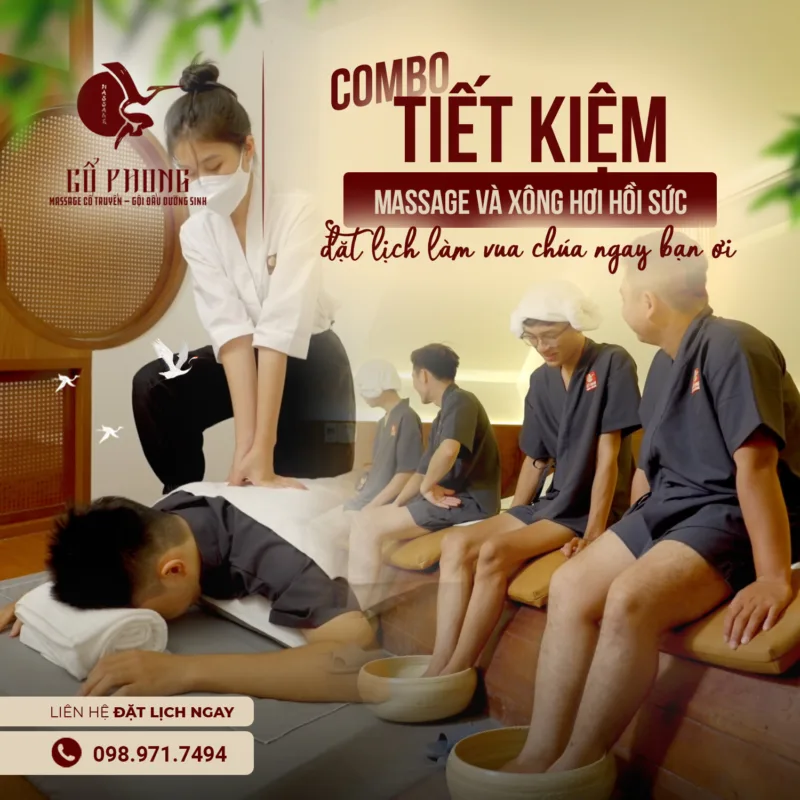
Alongside foot massage and full body massage, Cổ Phong offers a complete wellness ecosystem: therapeutic hair washing, deep therapeutic massage for neck, shoulder and spinal pain, herbal steam baths, and traditional gua sha and cupping. All of these can be combined flexibly into packages that fit each person’s schedule and needs.
And what many guests remember most about Cổ Phong is not only the quality of the service but the way they are welcomed and looked after as a guest who is genuinely valued: complimentary hot wellness soup, egg, fresh juice and a steam session after every visit, and no tipping, because attentive care here is the standard rather than the exception.
Whether you need a foot massage after a tiring week on your feet, or a full body massage to release all the pressure you have built up, Massage Cổ Phong has the expertise and the dedication to give you what you actually need, not just what you thought you wanted.
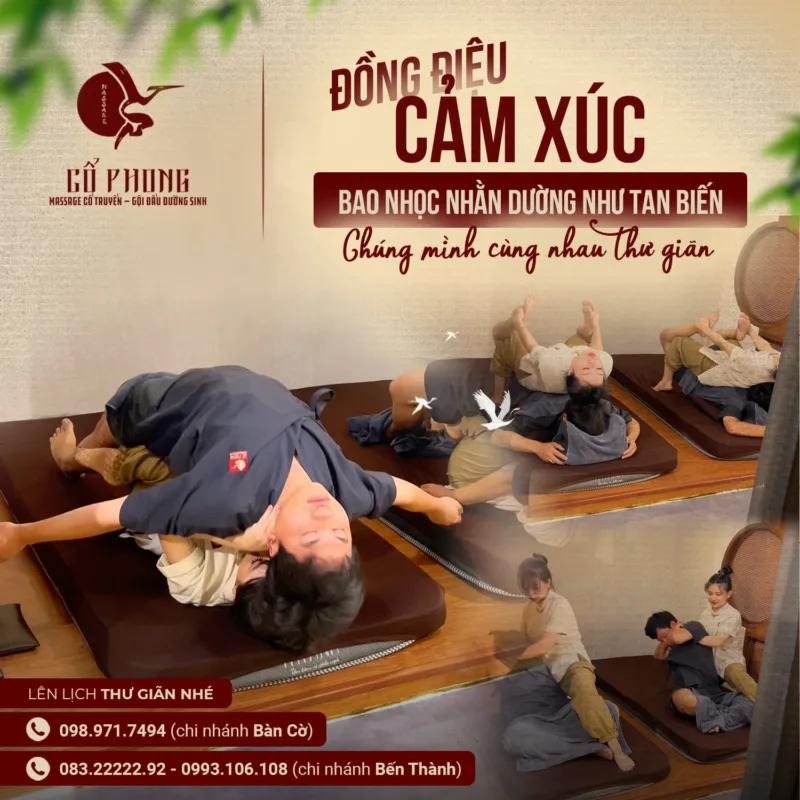
🗓 Book your appointment today!
Bến Thành Branch (formerly District 1)
- 106-108 Lê Thị Riêng Street, Bến Thành Ward, TPHCM
- Hotline: 083.22222.92 – 0993.106.108
- Opening hours: 10h-22h
- Facebook: Massage Cổ Phong District 1
Bàn Cờ Branch (formerly District 3)
Facebook: Massage Cổ Phong District 3
408 Nguyễn Thị Minh Khai, Bàn Cờ Ward, TP.HCM
Hotline: 0989.71.74.94
Opening hours: 10h-22h
If you only want to focus on your feet, go for the deep-tissue foot massage.


